
Shipping Document Automation - JKAP Technologies Pvt. Ltd.
How Digitalization is Transforming Bills of Lading, Manifests, and Global Trade.
Creative & Innovative Digital Solutions for Shipping and Logistics.

Despite significant advances in global trade technology - from vessel tracking to port automation - the shipping industry continues to rely heavily on manual documentation. Every shipment involves a trail of critical paperwork such as the Bill of Lading (B/L), cargo manifest, customs forms, and delivery orders.
For many shipping lines and freight forwarders, these documents are still created using spreadsheets or word processors, verified manually, and shared over email. This not only consumes valuable time but also introduces errors, compliance risks, and avoidable delays in the shipping process.
In today's digital-first logistics environment, manual document handling is no longer sustainable. The future belongs to shipping document automation - a solution that streamlines operations, ensures accuracy, and accelerates the entire trade workflow.
Shipping document automation refers to the use of technology to create, validate, exchange, and manage shipping documents automatically — with minimal human input.
Instead of manually copying data across systems or templates, automation tools integrate directly with booking and ERP systems to:
Generate documents instantly
Validate data for compliance
Distribute them electronically to customers, port authorities, and partners
This digital shift ensures data consistency, improves traceability, and allows companies to focus on growth instead of paperwork.
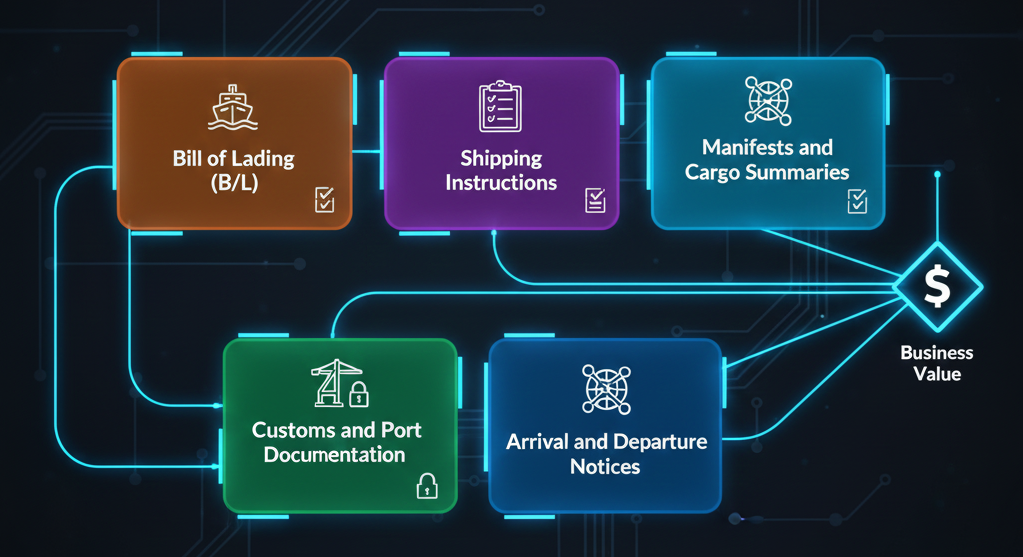
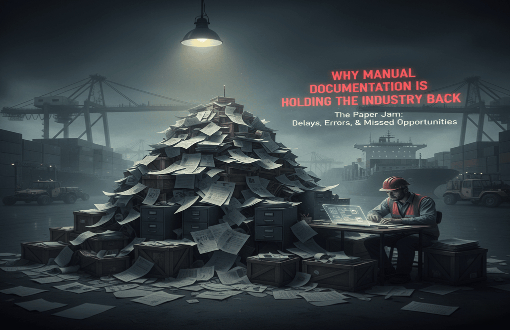
Traditional documentation processes are prone to inefficiencies:
Repeated data entry across multiple systems
Human errors in cargo or consignee details
Delays in document approval and release
Challenges in version control and data sharing
For a shipping line managing hundreds of containers daily, these issues compound quickly — affecting customer satisfaction and operational costs. Automation eliminates these bottlenecks by creating a single source of truth, ensuring that every document, from the first draft to the final e‑B/L, is accurate, compliant, and instantly available.
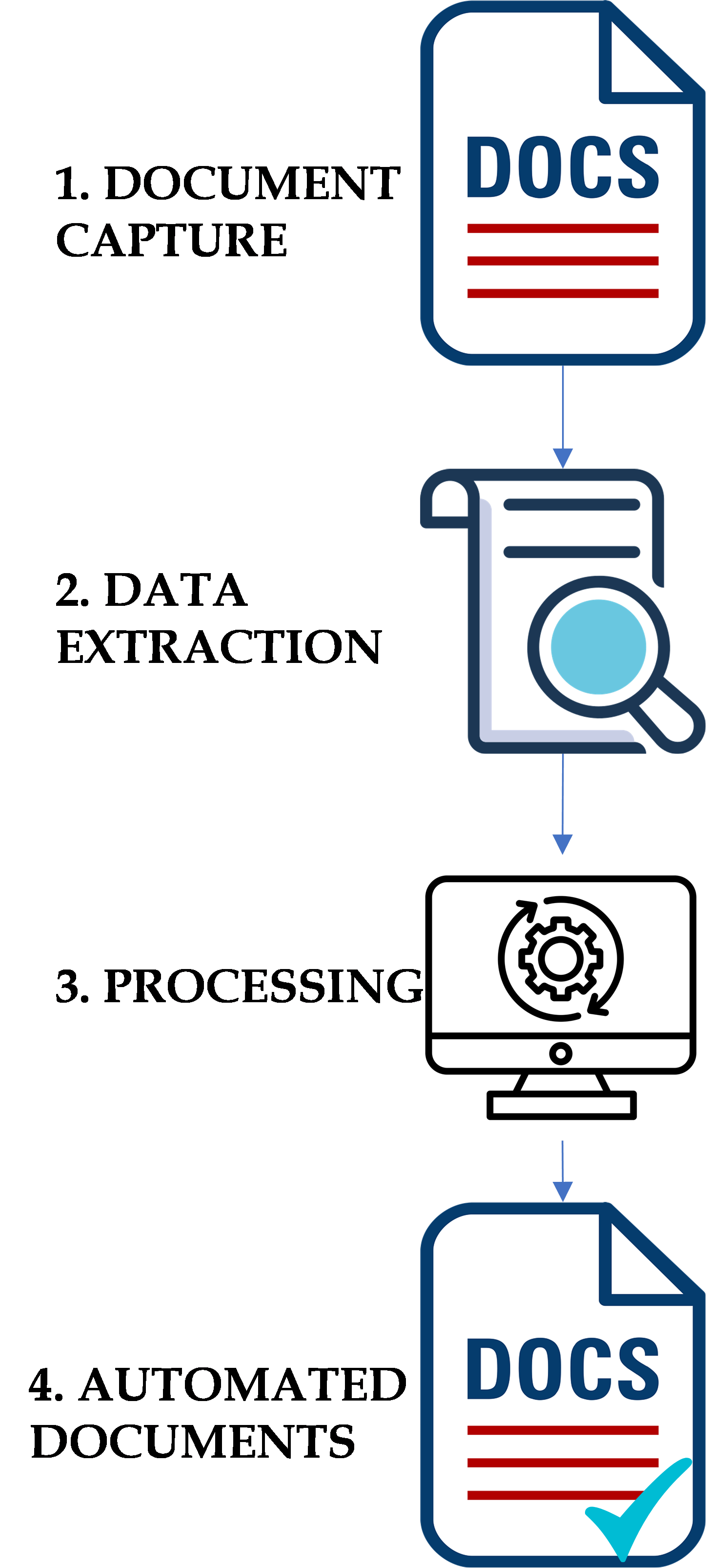
Let's break down how a typical automation workflow functions:
Data Integration: The system connects to existing booking or ERP platforms through APIs or EDI, fetching shipment and customer data automatically.
Dynamic Templates: Standardized document templates (B/L, manifest, invoice) are pre-defined and automatically populated with accurate data.
Validation Rules: Automated checks verify mandatory fields, port codes, and regulatory compliance before document generation.
Digital Approval Workflow: Designated team members review and approve documents online - no emails or printouts needed.
Electronic Distribution: Once approved, documents are sent electronically (PDF, XML, JSON, or EDI) to customers, customs authorities, and port systems.
Archival & Audit: Each version is securely stored for future reference, ensuring complete auditability and traceability.
Document capture
Data extraction
Processing
Automated documents
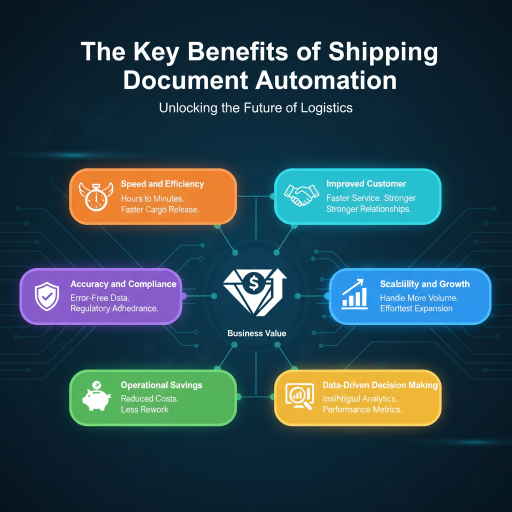
Speed and Efficiency: Document generation that once took hours can now be completed in minutes, accelerating cargo release and billing cycles.
Accuracy and Compliance: By pulling data directly from verified systems, automation minimizes human errors and ensures compliance with customs and port regulations.
Operational Savings: Automation reduces administrative workload, minimizes rework, and cuts costs related to printing, couriering, and manual verification.
Improved Customer Experience: Faster, error-free documents enhance customer satisfaction and strengthen long-term relationships.
Scalability and Growth: As shipment volumes grow, automated systems handle larger workloads effortlessly — without the need for proportional manpower expansion.
Data-Driven Decision Making: Automated systems generate analytics and reports, offering visibility into document turnaround times, approval bottlenecks, and performance metrics.
A regional shipping line operating across Asia and the Middle East faced significant challenges in B/L preparation. Each Bill of Lading took up to 30 minutes to draft, review, and finalize — often leading to errors and delays.
After implementing a customized automation solution by JKAP Technologies Pvt. Ltd., integrated with their booking system:
Document preparation time reduced by 80%
Data entry errors decreased by 90%
Customer document turnaround improved from 24 hours to less than 2 hours
This transformation resulted in smoother operations, faster vessel clearances, and improved client trust — proving that automation delivers measurable business outcomes.

If you’re planning to automate your documentation process, start with a phased approach:
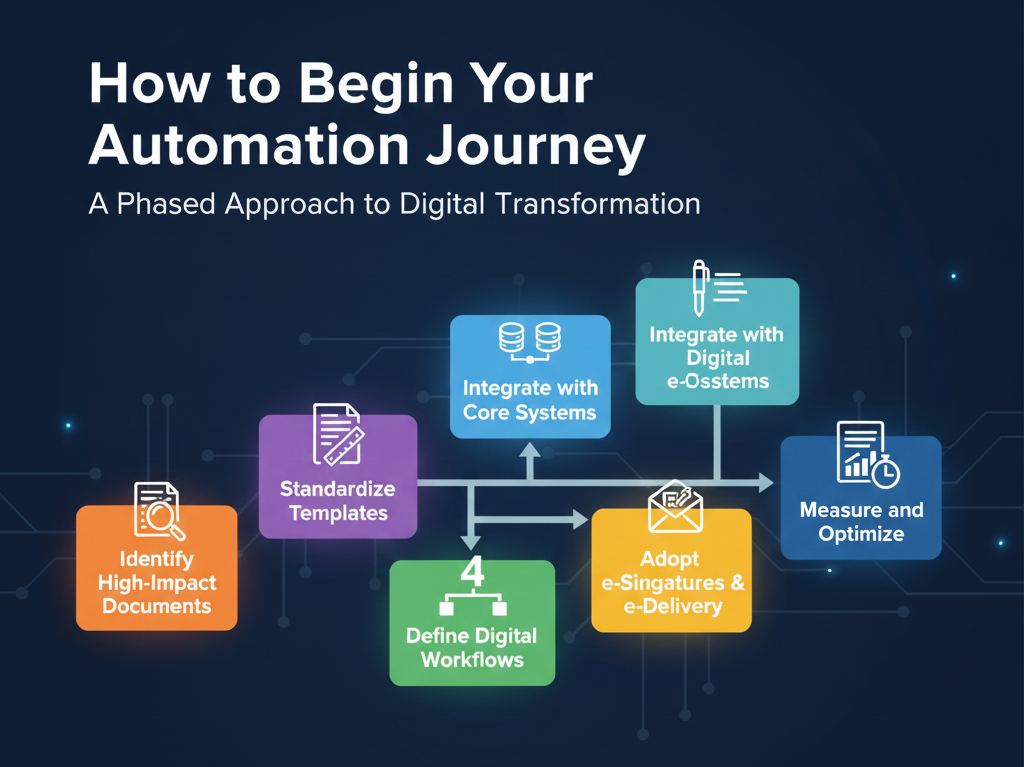
Identify High-Impact Documents: Begin with documents that consume the most time or are prone to errors — typically B/L and manifests.
Standardize Templates: Digitize your document templates and align them with international standards.
Integrate with Core Systems: Connect automation tools with your ERP, CRM, or booking systems to ensure real-time data flow.
Define Digital Workflows: Establish approval hierarchies and validation steps to ensure control and accuracy.
Adopt e-Signatures & e-Delivery: Replace physical signatures and couriered documents with secure, compliant electronic alternatives.
Measure and Optimize: Track metrics like time saved, errors reduced, and customer feedback to continuously refine your process.
At JKAP Technologies, we help shipping and logistics companies navigate each stage of this transformation — from workflow design to system integration and deployment.
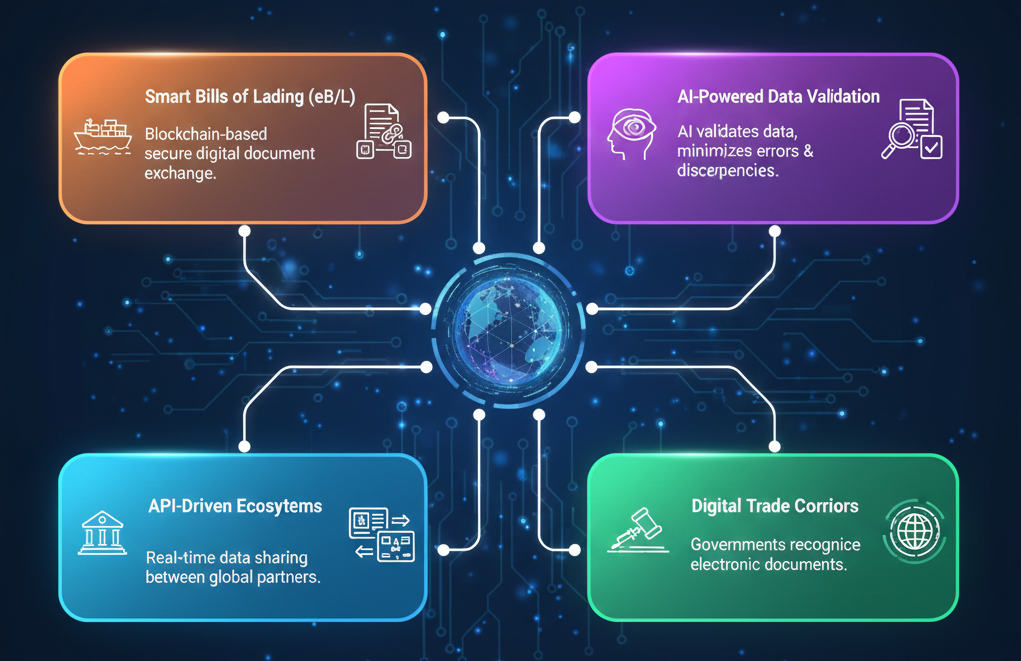
The future of maritime documentation is digital, intelligent, and interconnected. Here’s what’s coming next:
Smart Bills of Lading (eB/L): Blockchain-based eB/L platforms are enabling secure, tamper-proof, and globally recognized digital document exchange.
AI-Powered Data Validation: Artificial Intelligence is improving document accuracy by automatically validating data and identifying discrepancies before submission.
API-Driven Ecosystems: Modern APIs are replacing traditional EDI systems, enabling real-time data sharing between carriers, ports, and customs.
Digital Trade Corridors Governments and trade authorities are increasingly recognizing electronic documents, paving the way for paperless trade.
As these innovations mature, automation will no longer be optional — it will be essential for every competitive shipping business.
Shipping document automation is more than a process upgrade — it’s a strategic enabler for efficiency, accuracy, and growth.
It allows organizations to scale faster, operate leaner, and deliver superior service in a highly competitive market.
At JKAP Technologies Pvt. Ltd., we combine our deep shipping domain knowledge with cutting-edge software expertise to deliver custom automation solutions that modernize documentation workflows, integrate seamlessly with existing systems, and ensure compliance with global trade standards.
If your organization still relies on manual documentation, it’s time to embrace automation and move confidently into the future of shipping.
Get in touch with JKAP Technologies Pvt. Ltd. to explore how our document automation solutions can help streamline your operations and accelerate your digital transformation.